
Alse Young - Theater of the Noose
“Alse Young was hanged.” That is the entire official sentence. Eight syllables. One woman. An empire of fear trying to make itself sound orderly. The archive offers it up like a household note, as if they were recording the weather or the slaughter of a pig.
SALEM WITCH TRIALS - COLONIAL WITCH TRIALSWITCHES
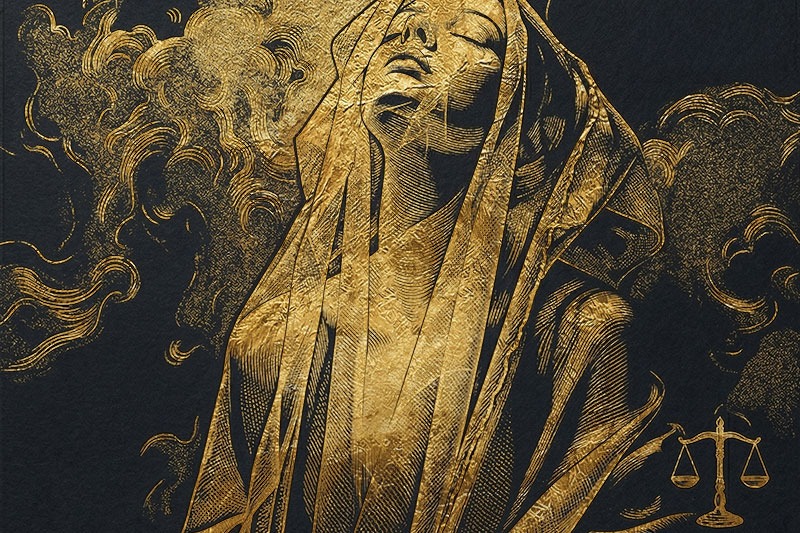
Part I: Fever
“Alse Young was hanged.”
That is the entire official sentence. Eight syllables. One woman. An empire of fear trying to make itself sound orderly. The archive offers it up like a household note, as if they were recording the weather or the slaughter of a pig. No pulse. No throat. No heat. Just the clean clerical efficiency of men who preferred their violence laundered through ink.
But fever is never tidy. Neither is fear. And Connecticut in the spring of 1647 was swollen with both.
Windsor had begun to smell wrong. Not just of wet earth and chimney smoke and the sour wool of a colony trying very hard to believe itself chosen. There was another smell beneath it now. Sickroom heat. Steeped herbs gone bitter in the pot. Milk turning. Linen soaked with sweat. The strange metallic scent of panic when it settles into a house and realizes it has been invited to stay.
Children burned first.
One by one, then several at once. Small bodies blazing in their narrow beds while mothers wrung out cloths in basins and pressed prayers into damp foreheads that could not hear them. Fathers stood at the edges of rooms with all the authority of fence posts, upright, wooden, and utterly useless against a rising tide. Ministers called suffering a test, which was convenient. They were never the ones made to cool a body through the night or scrub vomit from the floorboards before dawn.
The town called it God’s will because they had no cure for it. Men are often theological when they are helpless.
Alse Young knew what fever looked like before it took the face from someone. She knew the glazed eyes, the cracked lips, the way heat could turn a child spectral before the body had even made up its mind to die. She knew what willow bark could ease, what mint could settle, what honey could soften, what poultice could draw. Not miracles. Not magic. Just the ordinary, undervalued brilliance of a woman who had paid attention. The kind of knowledge that keeps people alive until men decide it threatens them.
She kept rosemary hanging near the hearth. Comfrey drying in bundles. Mugwort tied in string. Her hands always carried some trace of the work, a bruised green scent in the palms, resin under the nails, cinnamon and smoke in the cuffs. There are women who move through a room as decoration. Alse moved through one like an answer.
That was the first problem.
The second was that she did not perform gratitude the way the town preferred. She was married, yes. Useful, yes. A mother, yes. But there was something in her the men could not soften. She had the look of a woman who did not automatically agree. A woman who could listen to a sermon about obedience and think, privately and correctly, what a strangely elegant word for coercion.
That kind of face has always made small men feel prophetic.
The sickness worsened. Houses that had once smelled of bread and tallow became chambers of waiting. The bells rang too often. Grief began walking openly through Windsor, no veil, no shame. The Thornton family lost children. So did others. The death count climbed until even the righteous started glancing at one another with that wild look people get when reality refuses to obey the story they’ve been told about it.
Their city on a hill was not shining. It was sweating.
And because Puritan men could find Satan in a shadow but never their own reflection in a blade, they went looking for a woman to carry what they could not bear. Not yet openly. Not yet with rope.
First came the watching. A pause too long when Alse entered a room. A conversation clipped short near the well. Someone refusing the jar she offered because her hand had touched it. Someone else knocking at her door in the dark for a remedy they would later pretend to fear. That was the hypocrisy of the place. Women’s knowledge was welcomed in private and condemned in public, used first and punished afterward.
Especially if the woman carrying it did not tremble properly. And Alse did not tremble. Not where they could see.
At dusk, when the village shrank into emberlight, she sometimes crossed to the home of Mercy Tinker under the excuse of broth or linens, a domestic alibi that men rarely notice because it sounds like work. Mercy had a mouth made for silence and eyes that held onto a person longer than politeness required. Her husband was often away on town business, one of the many small mercies of being a woman in a settlement built by men who loved meetings more than intimacy.
Sometimes Alse came to bring herbs. Sometimes Mercy had none to return. Sometimes the exchange was only a look over the rim of a candle flame, one woman recognizing in another that devastating, dangerous thing, a mind still alive inside the cage.
It is difficult to say when tenderness becomes conspiracy. Perhaps it happens the first time one woman reaches for another’s wrist and neither of them pretends it was an accident.
Mercy’s youngest had been coughing for days when Alse came one evening with horehound and thyme. The child slept at last in the next room, breath shallow but steadier. The house was quiet in the particular way only sick houses are. Not peaceful, just exhausted.
“You should rest,” Mercy said.
Alse gave a small smile. “That command has no authority here.”
Mercy laughed then, softly, as if laughter itself had become contraband. It changed her face. It took some of the widow-darkness out of it, though she was not widowed, only lonely in that way marriage often makes possible.
“You speak too plainly,” Mercy said.
“And you listen too closely.”
The candle guttered between them. Outside, the wind moved over the clapboards like a warning. Mercy reached for the bundle of herbs and caught Alse’s fingers with it. Just for a moment. Skin to skin. Warm. Human. Entirely enough to indict a woman in a world such as theirs.
Alse did not move away. There was rosemary on her sleeve and beeswax in the air. Mercy’s thumb rested once, lightly, against the side of Alse’s hand, as if testing whether something so small could still be called hunger.
In another life, in another century less diseased in its soul, that touch might have remained what it was, comfort passing honestly between two women. But in Windsor, all female intimacy lived under suspicion, because men have always understood that women loving each other, even quietly, even imperfectly, creates a world where male authority starts looking embarrassingly optional.
Mercy let go first. A discipline learned young. A survival skill. A liturgy.
Still, the air stayed charged around them, intimate as breath.
“I dreamed of flames last night,” Mercy said finally. “Not my house. The meeting-house.”
Alse tilted her head. “That sounds almost cheerful.”
Mercy smiled despite herself. “You are wicked.”
“No,” Alse said. “Only observant.”
But that, too, was a kind of wickedness in a place built on performance. Because Alse saw things. She saw which men enjoyed public prayer a little too much, like actors discovering applause. She saw how ministers turned uncertainty into doctrine. She saw the wives aging under labor while their husbands aged under importance. She saw how the town’s fear moved, never upward toward power, always sideways toward the nearest woman it could afford to sacrifice.
She was not dangerous because she consorted with darkness. She was dangerous because she could see in it.
By April the town was mean with grief. There is a point when mourning curdles and begins looking for a target, and Windsor had crossed it. You could feel it in the meetinghouse, where the sermons grew hotter as the bodies grew colder. Prayers had stopped sounding devout and started sounding defensive, as if God might be persuaded, by sheer noise, not to notice the failure of His most devoted little settlers.
When explanation fails, accusation enters dressed as certainty. The whispers found Alse because they had already rehearsed her shape. A woman with remedies. A woman with no sons. A woman with a mind visible from across the room. A woman whom other women trusted. A woman who had touched the sick and not died herself.
That last one was especially offensive. People will forgive power more easily than they will forgive survival.
So the rumors began the way they always do, as cowardice with a lowered voice. A hen gone strange. A child worsening after broth. Someone remembering that Alse had once argued. Someone else deciding her composure during crisis was unnatural. Soon enough every useful skill she possessed was rewritten as evidence. The herbs became suspect. The silences became ominous. Her intelligence, that oldest female crime, became nearly unpardonable.
By the time the men began speaking of Satan, they had already decided what they needed, not truth, but theater. And theater, in a colony like this, required a woman.
On the night before the accusation reached her door, Alse stood alone outside her house and looked up at the spring sky. No stars. Just cloud cover and the scent of thawing ground. Behind her, through the wall, she could hear the small sleeping sounds of her daughter. Ahead of her, down the road and through the dark, lived a town full of people who would accept her help with one hand and build her scaffold with the other.
She knew the weather had changed. Not the sky. The human weather. That pressure in the air before a storm. The sense that everyone around you has started collaborating with a story in which your body is the price of their relief.
And still she stood there, unbowed, the night cool against her throat.
If fear were holy, those men would have been saints. Instead they were only frightened, and like frightened men across history, they were preparing to call their panic righteousness. Alse closed her eyes and breathed in smoke, earth, and the ghost of rosemary still clinging to her skin.
In the morning, they would come for her. Not because they had proof.
Because they had fever.
---
Part II: The Weight of Iron
The morning did not arrive with a trumpet or a storm. It came with the same gray, indifferent light as any other Tuesday. It came with the sound of a bucket hitting the bottom of a well and the persistent, rhythmic chopping of wood three houses over.
Alse was in the garden.
She was clearing the winter’s rot from the kale beds, her knees pressed into the cold, forgiving mud. She was deliberately focused on the earth because the air above it felt too heavy to breathe. There is a specific kind of silence that precedes an arrest, a vacuum where the neighbors’ voices should be. Usually, Goody Miller would be calling to her cat. Usually, the Thornton boys would be throwing stones at the fence.
Today, the road was a hollow bone.
She heard them before she saw them. Not the sound of a mob, that would come later, once the permission had been signed, but the sound of four men walking with the synchronized weight of a foregone conclusion. Heavy boots on the drying mud. The metallic jingle of a bridle. The low, gravelly murmur of Magistrate Ludlow, a man who wore his piety like a suit of armor he never quite grew into.
Alse did not stand up immediately. She stayed on the ground, her fingers curled around a handful of dead stalks. She let the mud seep into the weave of her skirt. She wanted to remember the cold, solid reality of the land before she was moved into the abstract world of their law.
“Alse Young.”
Ludlow’s voice was thin. He sounded like a man who had spent the night rehearsing a role he wasn’t sure he could play.
She stood then, wiping her hands on her apron. She did not brush the dirt from her knees. If she was to be a spectacle, she would be an honest one.
There were four of them. Ludlow, the constable, and two others, men she had known for a decade. Men whose children she had sat with through the croup. They would not look at her eyes. They looked at her throat, as if already measuring it for the hemp.
“The town is sick, Alse,” Ludlow said, skipping the formal greeting. He gestured vaguely toward the village, where the smoke from a dozen sickrooms rose like white flags of surrender.
“The town is diseased, Magistrate,” Alse corrected. “There is a difference.”
The constable stepped forward, his hand resting on the hilt of his belt. “We are here on a warrant of inquiry. There are... complaints. Affidavits. The Thornton child passed in the night.”
Alse felt a cold needle of grief, but she did not let her face break. To show sorrow was to admit a connection. To show nothing was to be called hard-hearted. It was a game where the rules were written in a language she was not allowed to speak.
“I gave the Thornton child mint and honey,” Alse said. “To soothe the throat. Not to stop the heart.”
“And yet,” Ludlow said, gaining confidence from the sound of his own authority, “others took the same honey and did not die. Only those you visited with your ‘remedies’ seem to find the grave so quickly. It is a strange magnetism you possess, Alse. A selective shadow.”
This was the theater. The logic was a circle, and she was the point in the center.
“Where is my daughter?” Alse asked. Her voice was suddenly sharp, the observant woman cutting through the accused woman.
“She is with the Minister’s wife,” the constable said. “For her own protection. It is not fit for a child to see her mother in the grip of such... investigations.”
Protection. Another elegant word for theft.
They moved in then. They did not touch her roughly at first. They did not need to. The weight of their presence was its own kind of shackle. As they led her toward the road, she saw the faces in the windows. Small, pale ovals behind glass. The women she had traded seeds with. The women who had whispered their secrets to her over steaming cups of tea.
They were watching their own safety walk away in her body.
As they reached the edge of her property, she saw a figure standing near the well. It was Mercy. She was holding a bundle of laundry so tightly her knuckles were white as bone. Their eyes met for a heartbeat, a collision of terror and recognition. Mercy’s mouth moved, a silent, frantic prayer or a warning, but she did not step forward.
She could not. To move toward Alse now was to step onto the scaffold beside her.
Alse gave a microscopic shake of her head. Stay back. Live. Keep the mind alive inside the cage.
Then the constable’s hand finally closed around her arm. His grip was unnecessarily tight, the physical manifestation of his own fear. He needed her to be a monster so he would not have to feel like a coward for what he was about to do.
“Move on,” he grunted.
The road to the meetinghouse had never felt so long. Every step was a loss of territory. She was no longer a neighbor, a mother, or a wife. She was being translated. By the time they reached the heavy oak doors of the center of town, Alse Young had ceased to be a person.
She had become the Fever.
---
Part III: The Theater of the Noose
The Meeting-house Square in Hartford was not a place of prayer that day. It was a bowl of held breath.
The May air was thin and bright, the kind of cruel spring morning that promises life while men in black wool are busy preparing for the opposite. They had built the scaffold with the same unimaginative sturdiness they applied to their barns. A functional geometry of oak and hemp. A stage where the colony’s collective failure could be performed and then put to rest.
Alse stood at the center of it.
She was no longer the woman who cleared winter rot from kale beds. She was a silhouette. A shadow they had cast upon the wall of their own anxiety.
The crowd was a sea of familiar betrayals. There was Goody Miller, her face pinched with a terrifying, holy relief. There were the Thornton parents, their grief having finally found a shape it could strike. And there, at the very edge of the light, was Mercy. She was hooded, her face a pale moon in the well of her cloak, a silent, agonizing testament.
Magistrate Ludlow stood on the platform, his armor of piety now fully fastened. He held a parchment that fluttered in the breeze like a trapped bird.
“Alse Young,” he began, his voice amplified by the vacuum of the square. “You stand here by the grace of a merciful God and the judgment of a righteous people.”
Merciful. Righteous. Alse watched the words leave his mouth and dissipate. They were hollow things, shells used to decorate a murder.
He read the charges. The spectral visits. The malicious healing. The unnatural lack of sons. The insolent mind. He spoke of Satan as if they were old acquaintances, describing a pact Alse had supposedly signed in a forest she had only ever entered to gather birch bark for a fever.
The crowd began to find its voice. It started as a low, rhythmic thrum, a communal growl that fed on its own righteousness. They did not need evidence. They had the snap of the rope and the memory of their own dead children. They needed her to be the monster so they could go back to being the victims.
Alse looked past Ludlow’s sweating face. She looked directly at Mercy.
In that moment, the square vanished. The noise of the mob became the distant rushing of a river. There was only the line of sight between two women who had seen through the sermon. Alse did not offer a prayer. She offered a legacy.
Live, her eyes said. Remember the taste of the mint. Remember the weight of the wrist. Remember that they can only kill what they can understand, and they understand nothing of us.
The constable stepped forward with the hood. It was made of coarse, unwashed wool and smelled of the damp cellar where it had been kept.
“Do you have a final confession, Alse?” Ludlow asked, leaning in. He wanted a performance. He wanted her to break so he could feel like a savior.
Alse looked at him. She saw the rot in his soul, the small, shivering cowardice of a man who needed a woman’s death to justify his own importance.
“I confess,” Alse said, her voice clear and cold as a mountain stream, “that I have seen the heart of this town. And it is far darker than any forest.”
The crowd erupted. The theater had reached its climax.
The hood was pulled down. The world became a rough, gray texture. The smell of the hemp was sudden and sharp, oily, metallic, and final. She felt the ladder beneath her feet, the wood vibrating with the movement of the men.
She did not pray to their God. She did not ask for their heaven.
She thought of her daughter, Alice, sleeping in the Minister’s house, a seed of defiance already planted in her blood. She thought of the rosemary on her sleeve. She thought of the way the earth felt between her toes.
She was not afraid. Fear is for those who believe the story. Alse Young knew the story was a lie.
The drop was not an ending. It was a snap of the air, a sudden, violent translation from the abstract world of their law back into the cold, solid reality of the elements.
“Alse Young was hanged.”
The men went home and washed the ink from their fingers. They sat at their tables and ate their bread and told themselves the fever would break now. They told themselves they had restored the covenant. They had silenced the heresy.
They were wrong.
They thought they had buried a witch. They did not realize they had planted a forest.
Alse was the first. She was far from the last. They called it justice. We call it the first chapter.
History repeats. This time, we do not step quietly into the role they wrote for us.
Cocina de Brujas
They Called it Heresy. We Call it Tuesday.
Follow us here
© 2025. All rights reserved.
Join the kindred who cross the veil to claim their power through ritual scent journeys. Be first to experience emerging magick, whispered offers, and stories that kindle the senses. Sign the Book.
We guard your information like a sacred secret. No spam. No third party sharing. Unsubscribe anytime.