
BELTANE
The air on Beltane eve does not feel soft. It hums. There is a tension in it. Heat just beginning to rise from the ground. Blossoms pushing themselves open with a kind of urgency. Smoke threading through everything, sharp and resinous, cutting through the sweetness. This is not the gentle face of spring. This is the moment the world tips forward. Beltane is a threshold. Alive, fertile, and volatile.ost description.
WHEEL OF THE YEAR
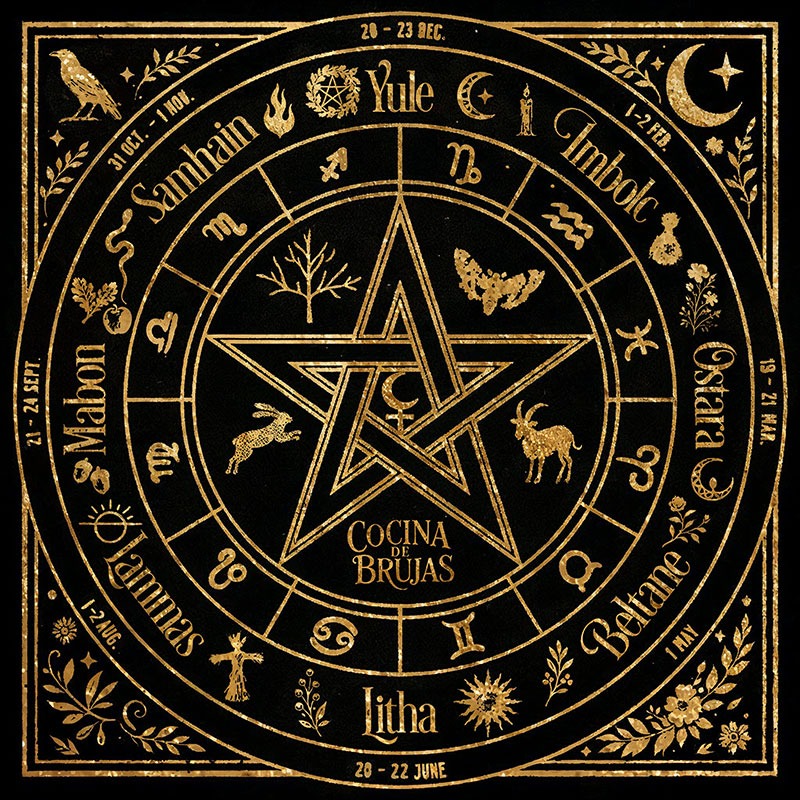
The air on Beltane eve does not feel soft. It hums.
There is a tension in it. Heat just beginning to rise from the ground. Blossoms pushing themselves open with a kind of urgency. Smoke threading through everything, sharp and resinous, cutting through the sweetness.
This is not the gentle face of spring. This is the moment the world tips forward.
Beltane is a threshold. Alive, fertile, and volatile.
It marks the first of May, the beginning of the light half of the year in the old Gaelic calendar. The long dark season is over. Summer has not fully arrived, but it is close enough to taste.
Historically, this was not a poetic idea. It was a matter of survival. Livestock were driven out of winter enclosures and into open pasture. Crops were beginning their fragile climb toward growth. Everything depended on what happened next.
And everything was at risk.
What Beltane Actually Is
Beltane, also known as Bealtaine, is one of the four great Gaelic seasonal festivals. It stands opposite Samhain on the wheel of the year. Samhain opens the dark half. Beltane opens the bright.
But before it became an aesthetic, before it was softened into flower crowns and vague spring magic, Beltane belonged to the field, the herd, the hearth, and the hilltop fire.
It was a pastoral festival rooted in protection. The animals were moving. The land was changing. The unseen world was restless. The community had to cross from one season into another without losing what kept it alive.
So Beltane was not celebration alone.
It was risk management with style.
Fire as Protection, Purification, and Reset
At the center of Beltane is fire.
Not decorative fire. Not symbolic fire. Real fire, built on hills, visible across distance, shared by entire communities.
These bonfires were the axis of the festival. Before they were lit, household hearths were extinguished. Darkness, briefly, everywhere.
Then flame returned, carried from the communal fire back into each home.
A reset.
A controlled beginning.
Fire was protection. Fire was purification. Fire was a boundary drawn in heat and light.
Livestock, the core of wealth and survival, were driven between two fires or through their smoke. This was not metaphor. It was a practical act charged with meaning. The smoke cleansed. The flames protected. Disease, misfortune, and unseen forces were kept at bay through contact with heat.
People followed.
They walked between fires. They leapt over embers. They passed their bodies through smoke.
Luck, fertility, purification.
These were not ideas you thought about. They were things you moved through.
There is a phrase that survives from this practice: to be between two fires. A dilemma. A dangerous place with no easy exit.
At Beltane, that was exactly where you wanted to stand.
The Thin Place
Outside the firelight, things were less certain.
Beltane was believed to be a time when the boundary between worlds thinned. The aos sí, the spirits that moved through the landscape, were closer, more active, less predictable.
They could bless or harm. They could protect or take.
The same opening that allowed life to surge forward also allowed something else to slip through.
So the old customs made sense.
Homes and thresholds were dressed in yellow flowers. Primrose, buttercup, marsh marigold. The color of flame, placed deliberately as a form of protection.
Hawthorn branches were set outside as May Bushes, decorated and watched carefully. The tree itself carried a reputation that was both alluring and dangerous. It marked the season, but it also belonged to something beyond the human world.
Offerings were left out. Milk. Food. Small gestures of respect.
Not devotion, exactly.
Diplomacy.
The Rules of Beltane
Beltane had rules.
You did not give away fire.
You did not give away milk.
To do so was to risk giving away your luck, your prosperity, your protection. These were not symbolic exchanges. They were understood as real transfers of power. What left your threshold could take something with it.
Even generosity had edges.
This is what Beltane looks like without the soft filter placed over it later.
It is not flowers for the sake of beauty. It is not a quaint celebration of spring. It is a moment where life surges forward and everything must be done to protect that surge from being cut short.
Desire and Danger
Desire sits at the center of Beltane.
Not romantic desire as a gentle, abstract feeling. Something more physical.
The drive toward growth. Toward union. Toward continuation.
In humans. In animals. In the land itself.
Courtship, attraction, the pull toward another body. All of it intensifies here.
But desire does not arrive alone.
Where there is attraction, there is also risk. Where there is openness, there is vulnerability. Beltane holds both at once.
The same force that brings things together can expose them. The same threshold that allows life to flourish can allow it to be taken.
This is the tension that gives the season its shape.
Desire and danger, moving together.
Fertility Without Softness
Fertility is often misunderstood.
Stripped of its context, it becomes soft. Decorative. Reduced to symbols that feel safe and distant.
But historically, fertility was not optional. It was tied directly to survival. A failed crop meant hunger. Sick livestock meant loss. The rituals of Beltane were not about celebrating abundance that already existed. They were about trying to secure it before it could disappear.
Fertility was physical. Necessary. Sometimes brutal in its stakes.
This is why fire mattered. Why smoke mattered. Why rules were followed with care.
The rituals were an attempt to impose structure on something fundamentally uncontrollable.
To guide it.
To protect it.
To survive it.
The Church Tried to Tame It
Over time, this edge became uncomfortable.
As Christianity spread through Gaelic regions, Beltane did not disappear overnight. It shifted. It was absorbed, reframed, softened where possible.
The month of May became dedicated to the Virgin Mary. Floral traditions were given a new context. Some practices were tolerated, others discouraged or condemned.
The more chaotic elements, the sensuality, the open engagement with forces outside the Church’s structure, became targets. Fire festivals were recast or suppressed. Behavior that once existed within a ritual framework was labeled dangerous or immoral.
And yet, the core of it never fully vanished.
The fear of giving away milk lingered. The caution around hawthorn remained. The idea that May dew carried power survived quietly, passed through generations as something half remembered but still practiced.
You can still find it if you look closely.
Historical Texture, Not Cosplay
Modern Beltane celebrations often blend elements from different traditions. Maypoles, specific god and goddess narratives, structured rituals that feel ancient but are often more recent interpretations.
None of this is inherently wrong. It can be meaningful.
But it is not the same thing as historical Beltane.
The original festival was less polished. Less unified. More practical. Rooted in land, animals, fire, weather, and immediate need.
For Cocina de Brujas, that distinction matters.
The goal is not to recreate a fantasy version of the past.
It is to draw from its texture.
The tension. The contradictions. The way beauty and danger sit side by side without resolving.
That is where the work becomes interesting.
The Scent of the Threshold
Scent is one of the most direct ways to access that space.
Because scent is physical. Immediate. It moves through the body before it becomes thought. It lingers. It shifts. It refuses to stay fixed.
At Beltane, the air itself is layered.
Smoke from burning wood. Sharp, resinous, slightly bitter. Juniper, if it is used, cutting clean through everything else.
The sweetness of blossoms, almost too much, tipping into something animalic as they begin to decay.
Damp earth underneath it all.
The faint metallic edge that comes before a storm.
Then the softer elements.
Rose, touched with morning moisture. Not heavy, but alive, almost translucent. The scent of water collected at dawn, carrying with it the quiet promise of renewal.
Frankincense or bay, lifting the composition, adding a solar clarity that sharpens rather than softens.
These are not just pleasant notes. They map onto the structure of the festival itself.
Smoke for protection.
Blossom for desire.
Resin for elevation.
Water for renewal.
Worn on the skin, they become something else.
Not a representation, but a continuation.
A way to step into that threshold without needing a hilltop fire.
Fragrance, in this sense, becomes a portable ritual.
Something you carry. Something that shifts your awareness. Something that marks a moment as different from the ordinary.
A Simple Modern Beltane Practice
A modern Beltane practice does not need to be elaborate to hold the core of the old fire.
Light a candle. Not for atmosphere, but as a point of focus. Let it become the center of a small, intentional space.
Pass your hands near the warmth. Notice the instinct to pull away, then move a little closer.
If you have access to smoke, let it move over your skin. Hair, hands, clothing. Not as performance, but as transition.
In the morning, use water deliberately. If you can gather dew, even better. If not, clean water will do.
Wash your face slowly.
Treat it as a reset.
A beginning.
Bring in something living. Flowers. Branches. Green growth. Not as decoration, but as a marker of the season pushing forward.
Then name what you are crossing into.
Protection.
Renewal.
Desire, if you choose, but with awareness of what it opens.
Keep it simple.
Keep it grounded.
Beltane does not require complexity. It requires presence.
Step Into It
At its core, Beltane is a moment where the world shifts.
Life becomes more intense. More visible. More demanding.
The line between safety and risk narrows, and you are asked to move through it anyway.
You cannot stay in winter.
You cannot remain untouched.
You step forward.
You pass through the fire.
You carry something with you on the other side.
Beltane is not something you watch.
It is something you cross.
rite your text here...
Cocina de Brujas
They Called it Heresy. We Call it Tuesday.
Follow us here
© 2025. All rights reserved.
Join the kindred who cross the veil to claim their power through ritual scent journeys. Be first to experience emerging magick, whispered offers, and stories that kindle the senses. Sign the Book.
We guard your information like a sacred secret. No spam. No third party sharing. Unsubscribe anytime.