
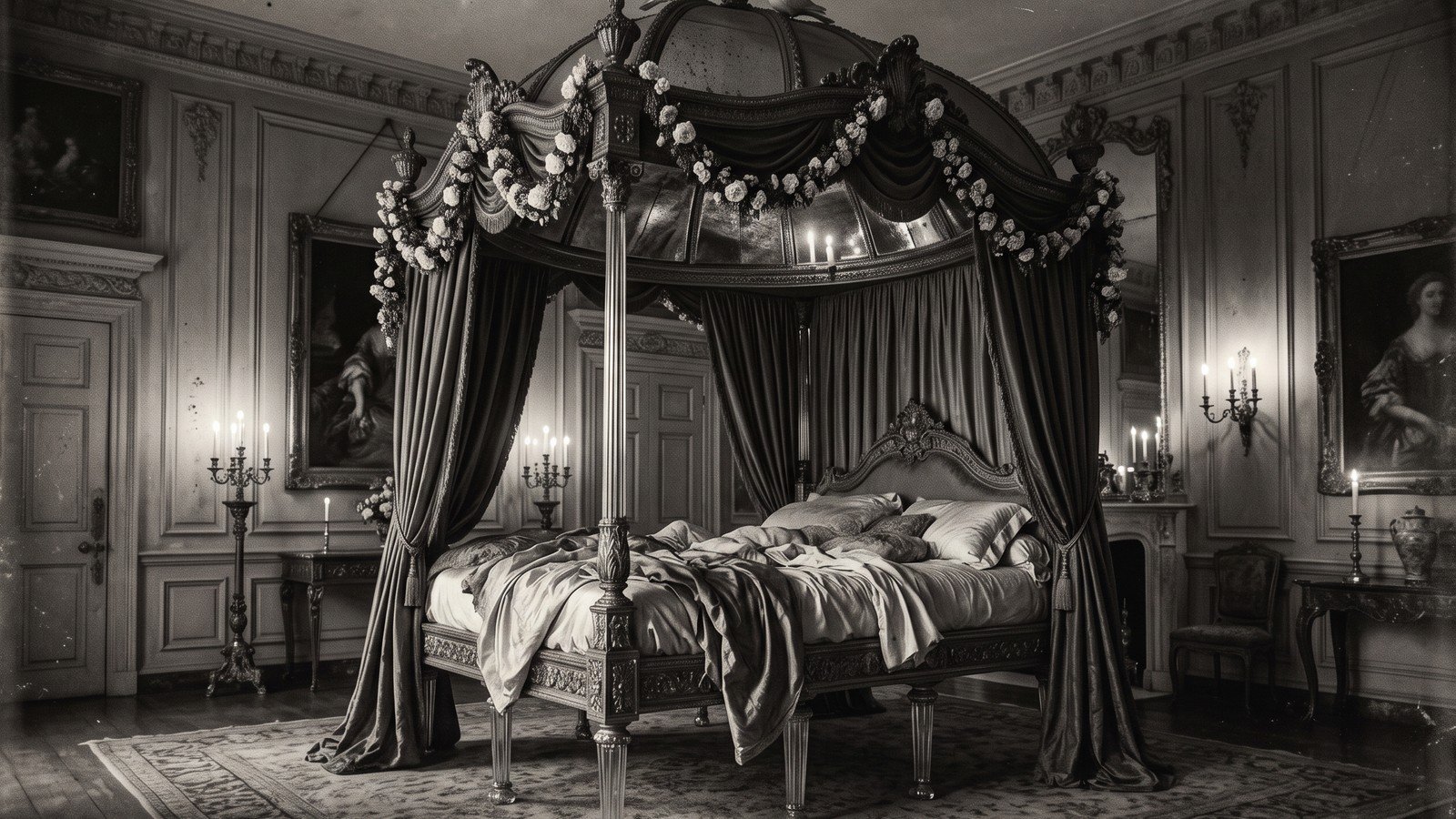
In the early 1780s, a fashionable Londoner with a private worry and a great deal of money could walk down Pall Mall to a grand old house called Schomberg House. Inside, past the porters and the lecture rooms, stood the most expensive bed in England.
It was supported by forty pillars of glass. Its dome was lined with mirrors. It had coloured sheets, and it played music. Its owner promised that couples who slept in it would at last have children.
His name was James Graham, and he was a doctor, more or less.
The doctor, more or less
Graham was born in the Cowgate, Edinburgh, on 23 June 1745. He studied medicine there and left without taking a degree, a small detail he did not let slow him down.
He spent time in America working as an eye and ear doctor, and in Philadelphia he learned about electricity, the miracle science of the age. He came home convinced that electricity, magnetism, music and fresh air could cure nearly anything. Horace Walpole, the writer, consulted him about his gout. Graham was not yet famous. He was working on it.
The Temple of Health

Around 1780 he opened his first Temple of Health on the Adelphi Terrace, beside the Thames. It was lavish, it was electrical, and it sold medicines with names like “electrical aether” and “nervous aetherial balsam”. He gave lectures at high prices. On display stood a Goddess of Health, a young woman presented as a model of physical perfection.
There is a famous story that one of these goddesses was a teenage Emma Lyon, later Lady Hamilton, later still the mistress of Admiral Nelson. The 1890 Dictionary of National Biography says only that she “is said to have been” exhibited by Graham. Modern historians call it a rumour. The historian notes that this has never stopped anyone from repeating it, including, just now, the historian.
The Adelphi was expensive. In 1781 Graham moved to Schomberg House on Pall Mall and gave it a better name: the Temple of Health and of Hymen. Hymen was the Greek god of marriage. The theme had shifted from feeling well to making heirs.
The bed itself
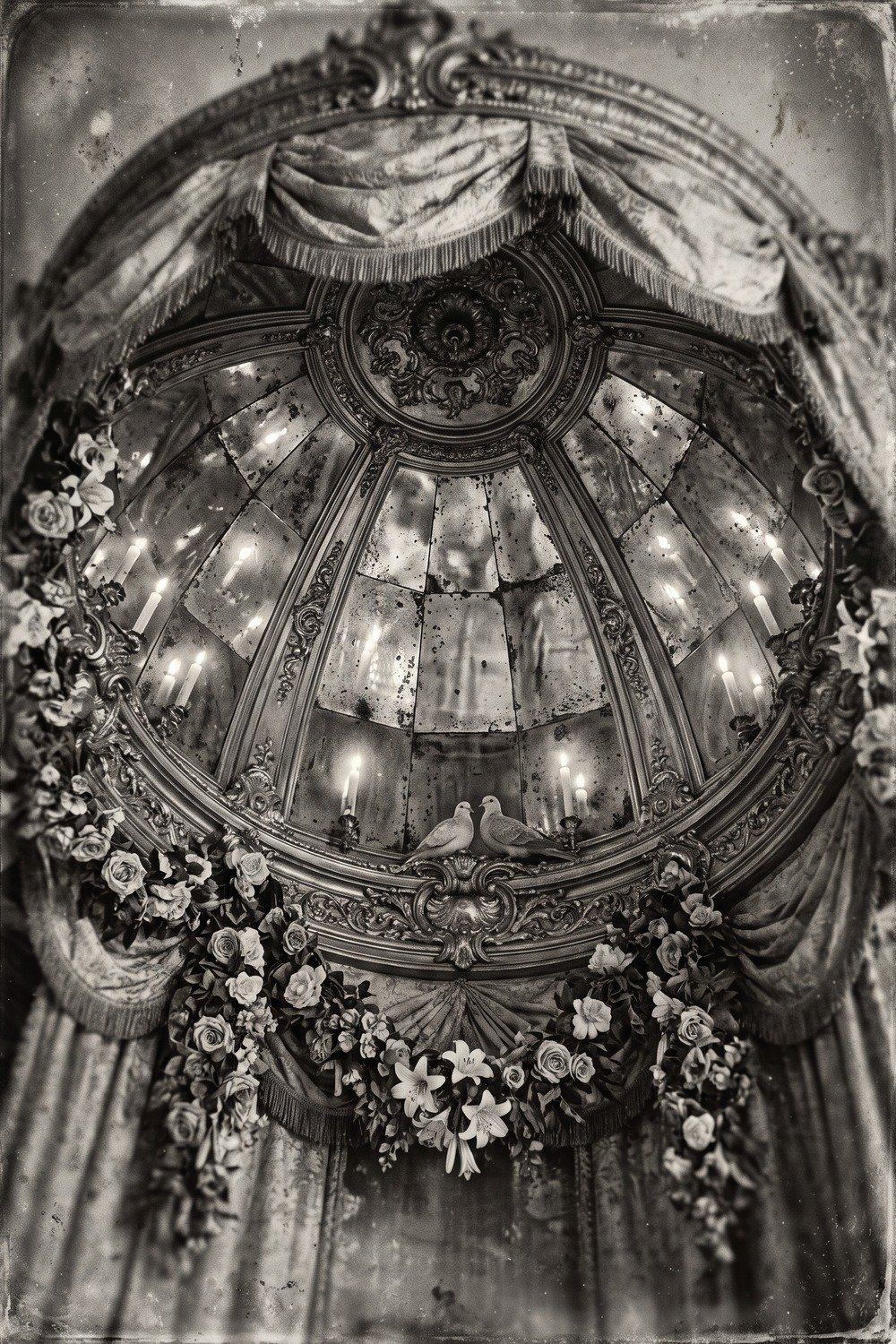
The Celestial Bed was the star of the show. Its maker, according to the Dictionary of National Biography, was a tinman named Denton, “of great mechanical skill”. Modern accounts describe it as about twelve feet by nine. Above it was a dome fitted with clockwork figures, fresh flowers and a pair of live turtle doves. Scented “aethereal” vapours drifted out of the canopy. The frame could tilt, which Graham believed helped conception. The whole thing was electrified and magnetised, and sat on its glass pillars to keep the current in.
Then there was the organ. Pipes breathed out what Graham called celestial sounds, and the music is said to have grown louder as the occupants grew more enthusiastic. Over it all stood a figure of Hymen with a motto from Genesis, telling the couple to be fruitful and multiply. Nobody could say they had not been briefed.
The price, by Graham’s own account in a pamphlet of 1782, was fifty pounds for the use of the bed. In the 1780s that was a serious sum of money. Whether anyone paid it, and how often, the record does not say. The historian suspects that the bed was mostly a very good advertisement for the cheaper lectures, which is a business model still in use.
His Lecture on Generation, delivered in the same rooms, argued that healthy sex inside marriage was practically a patriotic duty. He recommended cold water and moderation. He was firmly against prostitution. The building was on Pall Mall. One of these positions was harder to maintain than the others.
Debt, dirt and the end
The heavenly business did not pay. On 5 November 1782 his property was seized for debt and advertised for sale, though he managed to buy much of it back. In 1784 he left Schomberg House for good. What became of the Celestial Bed nobody seems to know.
Graham moved on to a new cure: earth bathing. In a pamphlet of 1790 he described lying buried naked in the earth, for hours at a time, day after day. He gave public demonstrations, lecturing while buried up to his chin. In his last years he became a religious enthusiast, calling himself the servant of “O. W. L.”, for Oh, Wonderful Love. At Edinburgh he was for a time confined to his own house as a lunatic. At the end of 1792 he fasted for about two weeks on nothing but cold water, to prolong his life.
He died suddenly at his house in Edinburgh on 23 June 1794, his forty-ninth birthday. The bed had promised to bring new life into the world. It had not, so far as anyone can prove, but it did make Graham the most talked-about doctor in London, which by his own standards was the harder trick.
The File
The documented record behind this post:
- Born in the Cowgate, Edinburgh, 23 June 1745; lectures “at high prices”; the Celestial Bed made by Denton, “a tinman of great mechanical skill”, promising relief from sterility; Emma Lyon “is said to have been” exhibited as the Goddess of Health in 1781; the move to Schomberg House in 1781, called the “Temple of Health and of Hymen”; his own statement in pamphlet 9 (1782) that he charged 50 pounds for the bed; property seized for debt 5 November 1782 and much of it bought back; the 1790 earth bathing pamphlet and lectures buried to the chin; “the Servant of the Lord O. W. L. (Oh, Wonderful Love)”; confined in his own house as a lunatic at Edinburgh; the fast of December 1792 to January 1793; sudden death in Edinburgh on 23 June 1794. (G. T. Bettany, “Graham, James (1745-1794)”, Dictionary of National Biography, 1890, Wikisource)
- Schomberg House, 80 to 82 Pall Mall, taken by Graham in 1781 and vacated in 1784; the “grand celestial state bed” supported by forty pillars of brilliant glass, with a dome lined with mirrors, coloured sheets and music; electrical aether and nervous aetherial balsam. (F. H. W. Sheppard, ed., Survey of London, vols 29 and 30, 1960, British History Online)
- Left medical school without a degree; work as an oculist and aurist in America and electricity learned in Philadelphia; Walpole consulted him about gout; the Goddesses of Health as models of physical perfection; the Emma Lyon story described as “a later rumour”; the bed’s size, dome of automata, flowers and live turtle doves, scented vapours, tilting frame, organ pipes, magnetism and the Hymen tableau; the Lecture on Generation. (Wikipedia, “James Graham (sexologist)”, citing Roy Porter in the Oxford Dictionary of National Biography)
- Not found in any source read: what happened to the bed after 1784.
Everything above the jokes is the record. The jokes are the historian’s.
Sign the Book. Odd histories, strange finds, first word on what comes next. Sign it at cocinadebrujas.com.