
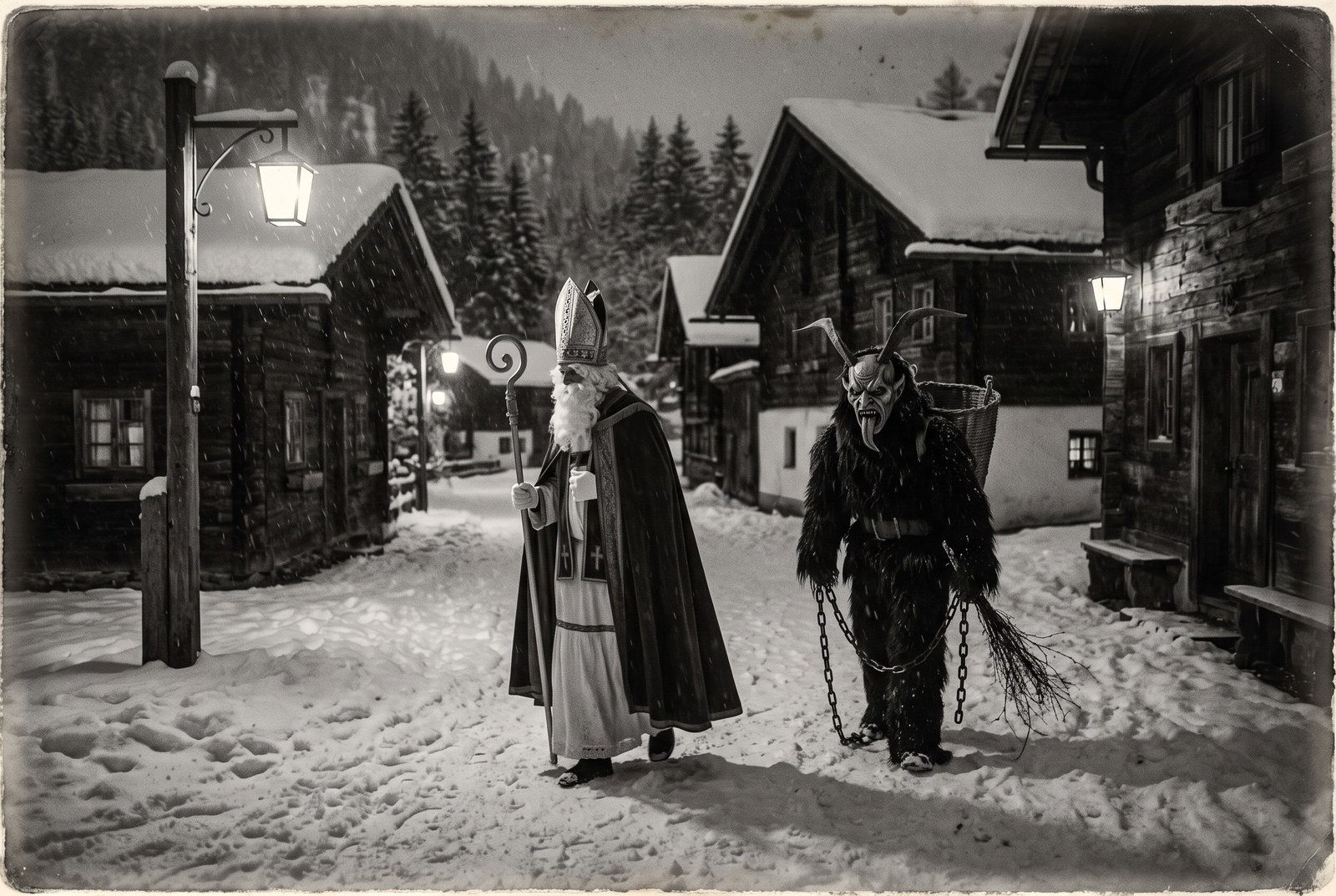
Every December, in the towns of the Alps, a saint goes visiting. He is kind, bearded and generous, and he brings sweets for children who have behaved.
He does not come alone. Walking behind him, rattling chains, is a hairy creature with horns, a long red tongue and a bundle of birch switches. His name is Krampus, and his job is the children who have not behaved.
The historian notes that this is an extremely modern management structure. The saint keeps the good news. The demon handles the complaints.
The night before Saint Nicholas
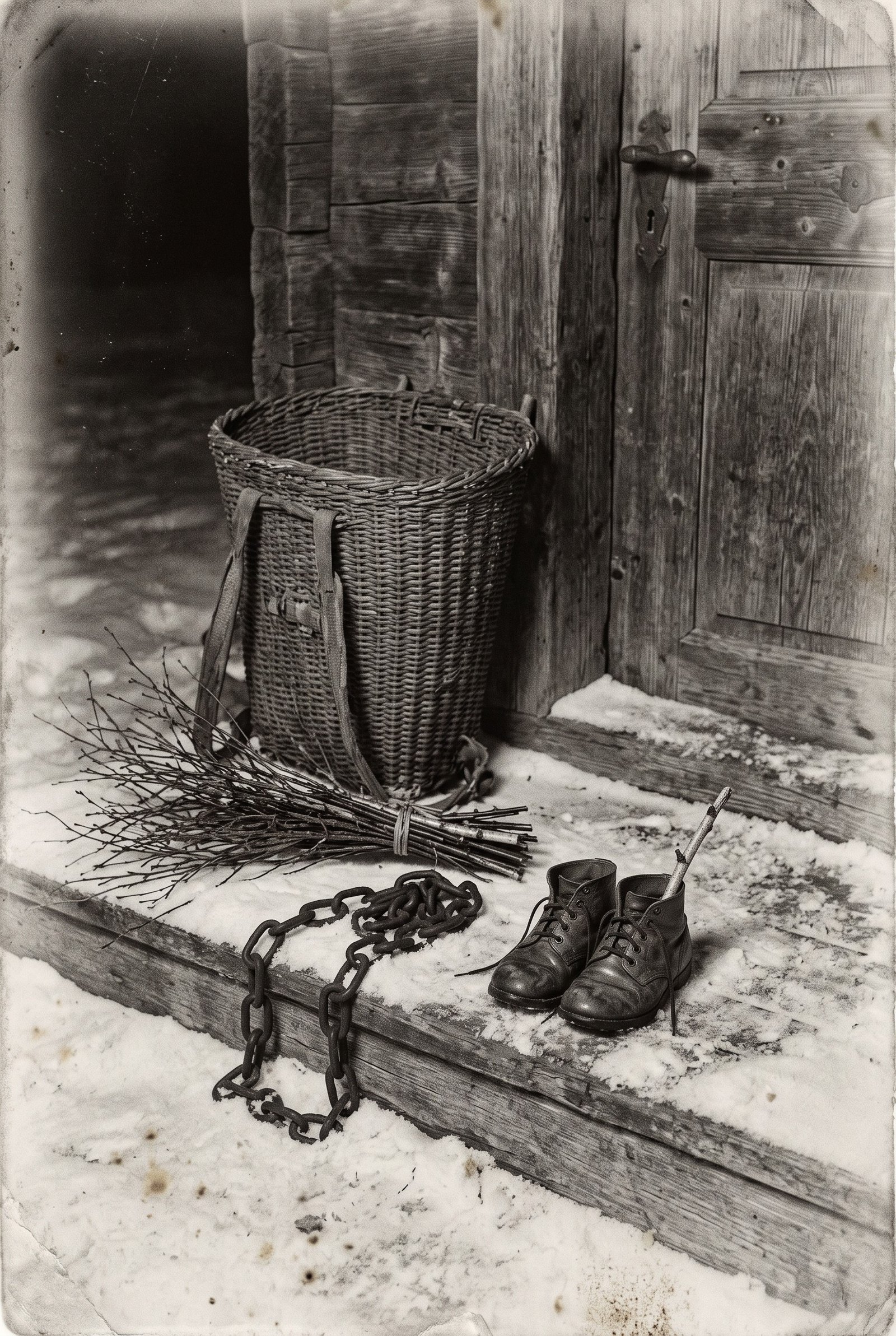
Krampus comes on the night of December 5, the eve of the feast of Saint Nicholas. In Alpine Austria and parts of Germany it is called Krampusnacht, Krampus night.
The arrangement, as Smithsonian Magazine described it in 2015, was simple. Saint Nicholas put sweets in the shoes of good children and birch twigs in the shoes of bad ones. Krampus specialised in the bad ones. Legend said a badly behaved child could be beaten with the birch, or stuffed into his sack and carried off to his lair.
His name is usually traced to the German word krampen, meaning claw.
Where he came from is less tidy. Folklorists generally place his roots in pagan winter customs of the Alpine region, older than the Christian feast he now attends. At some point he was folded into the saint’s visit, as a kind of supervised devil. Smithsonian put it neatly, quoting one American Krampus enthusiast: he is “the yin to St. Nick’s yang.”
The Church tried first
A horned, hairy figure with chains who drags people off in December looks, to a medieval eye, a great deal like the Devil. According to Smithsonian, the Catholic Church tried to banish Krampus celebrations in the 12th century for exactly that reason.
It did not work. He simply kept walking behind the saint, which is perhaps the safest place in Christendom for a demon to stand.
The historian observes that a religion which needed a devil to make its saint look generous was never going to win a war against the devil.
Then the government tried
The second attempt came from politics. In the 1930s Austria was run by a conservative Catholic government, and Krampus again fell out of favour. Smithsonian dates the push to 1934, at the hands of Austria’s conservative Christian Social Party. Other accounts give the early 1930s and disagree about how hard any ban was enforced.
Either way, it failed too. Smithsonian’s verdict: “none of it held.” The parades went on, the masks were carved, and the chains kept rattling.
The postcards got friendly
The thing that really spread Krampus was the post.
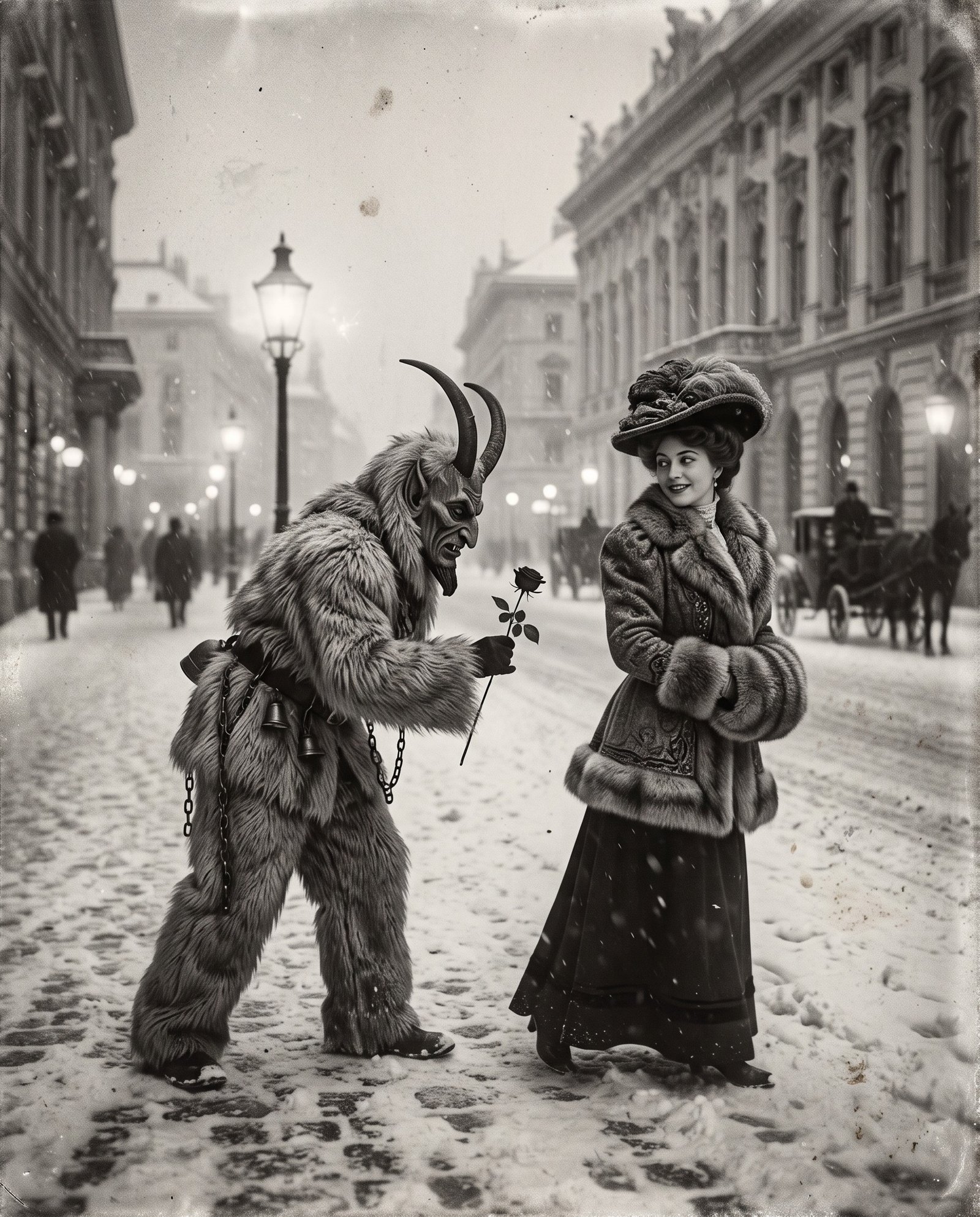
In the 1890s, postcards boomed in Germany and Austria, and with them came Krampuskarten, Krampus cards. Many carried the greeting “Gruss vom Krampus,” greetings from Krampus, above pictures of naughty children being whipped or carried off in a basket. Season’s greetings, Alpine style.
By the early 20th century the cards had changed their audience. As History.com put it, some became “a little more… adult.” Krampus is shown proposing to women. On others, a large female Krampus whips a row of tiny men with birch switches.
The historian will not speculate on who was posting these to whom. The historian will only note that a creature invented to frighten children had, within a generation, found a second career frightening grown men in a way they apparently did not mind.
The run
The modern form of the tradition is the Krampuslauf, the Krampus run. Men in hand-carved wooden masks, fur suits and enormous horns charge through the streets with bells and switches, often, History.com notes, after a good deal of drinking. It is not tied to a single night, and it has never stopped.
In recent years Krampus has crossed the Atlantic. In 2004 the American collector Monte Beauchamp published a book of the old Krampus cards. Now there are Krampus parties, Krampus sweaters and a 2015 Hollywood film called, inevitably, Krampus.
So the record stands like this. The Church tried to banish him. A government tried to banish him. Neither managed it, and a stack of postcards finished the job of making him famous.
He comes again on the night of December 5. Behave accordingly, or don’t.
The File
The documented record behind this post:
- Krampus visits on the night of December 5 with Saint Nicholas; sweets in good children’s shoes and birch twigs in bad ones; birch beatings and the sack; name from German krampen, “claw”; pagan Alpine roots; the Catholic Church’s attempt to banish Krampus celebrations in the 12th century; the 1934 attempt by Austria’s conservative Christian Social Party; “none of it held”; “the yin to St. Nick’s yang.” (Jennifer Billock, “The Origin of Krampus, Europe’s Evil Twist on Santa,” Smithsonian Magazine, December 4, 2015)
- Krampusnacht in Alpine Austria and parts of Germany; the 1890s postcard boom and Krampuskarten with “Gruss vom Krampus”; early 20th century cards that were “a little more… adult,” showing Krampus proposing to women and a large female Krampus whipping tiny men; the Krampuslauf; Monte Beauchamp’s 2004 book; the 2015 film. (Becky Little, History.com article on the Krampus legend, history.com/articles/krampus-christmas-legend-origin, December 5, 2018, updated 2025)
- Dates for the 1930s Austrian suppression differ between accounts (1932 or 1934), and at least one anthropologist’s account says no national ban was enforced, so this post says “the 1930s” and gives Smithsonian’s date as theirs. The 12th century Church attempt is as reported by Smithsonian; this post found no primary document for it.
Everything above the jokes is the record. The jokes are the historian’s.
Sign the Book. Odd histories, strange finds, first word on what comes next. Sign it at cocinadebrujas.com.