

The mandrake is a plant in the nightshade family. It has a rosette of leaves, small yellow fruit, and a thick, forked root that, if you squint and want it badly enough, looks like a little person.
People wanted it very badly. For about two thousand years the mandrake was a love charm, a fertility cure, a painkiller, a lucky doll and a murder weapon, and the main safety advice was to get a dog to do it.
A night with Jacob, paid in roots
The mandrake’s first appearance in the record is a domestic dispute. In Genesis 30, young Reuben finds mandrakes in a field and brings them to his mother, Leah. Leah’s sister Rachel, who is married to the same man and has no children, wants them.
The sisters do a deal. Rachel gets the mandrakes. Leah gets Jacob for the night. When Jacob comes in from the field that evening, Leah meets him with the news: “Thou must come in unto me; for surely I have hired thee with my son’s mandrakes.”
That is the King James wording. Jacob, as far as the text records, did not ask to see the paperwork. Leah conceived. The Song of Songs later mentions that “the mandrakes give a smell”, in a chapter that is not about gardening.
How to pick one, according to a philosopher
In the fourth century BC, Theophrastus, a student of Aristotle and the father of botany, wrote down how the root-cutters gathered it. You draw three circles round the mandrake with a sword. You cut it facing west. And while the second piece is being cut, someone dances round the plant and says as much as possible about the pleasures of love.
The Greek word is aphrodisia. The Loeb translator, writing in 1916, went with “the mysteries of love”, which is the most British possible way to describe what the dancer was shouting.
Theophrastus, to his credit, did not believe all of it. He thought some of these rules were added by the root-cutters to make the job look harder than it was. The historian notes that this is still how a great many trades price their work.
The dog

By the first century AD the rules had grown teeth. Josephus, describing a root called baaras near the Dead Sea, says it was dangerous to touch, so people dug round it until only a little stayed in the ground, then tied a dog to it. The dog ran after its master, the root came up, and the dog died on the spot, “instead of the man”.
Medieval herbals took this story and drew it, many times, with loving care. The dog is always in the picture. The mandrake is always shaped like a small, annoyed human. In later versions the root shrieks as it leaves the earth, and anyone who hears the shriek dies or goes mad.
Shakespeare’s audience knew the rule well enough that Juliet, imagining waking in her family tomb, could fear “shrieks like mandrakes torn out of the earth, that living mortals, hearing them, run mad”, and nobody needed a footnote.
Where mandrakes come from
German folklore added a darker birthplace. The mandrake, or Alraune, was said to grow at the foot of the gallows, where a hanged man’s body fluids fell on the ground. The details vary by teller and are best left in the original German.
It was also, despite this, a household good. Ancient doctors gave mandrake in wine before cutting and burning, because it put people to sleep. It does contain tropane alkaloids, the same family as scopolamine, so the sleeping part was real. So was the not waking up, if the dose was wrong.
Fakes, friars and a teenage general
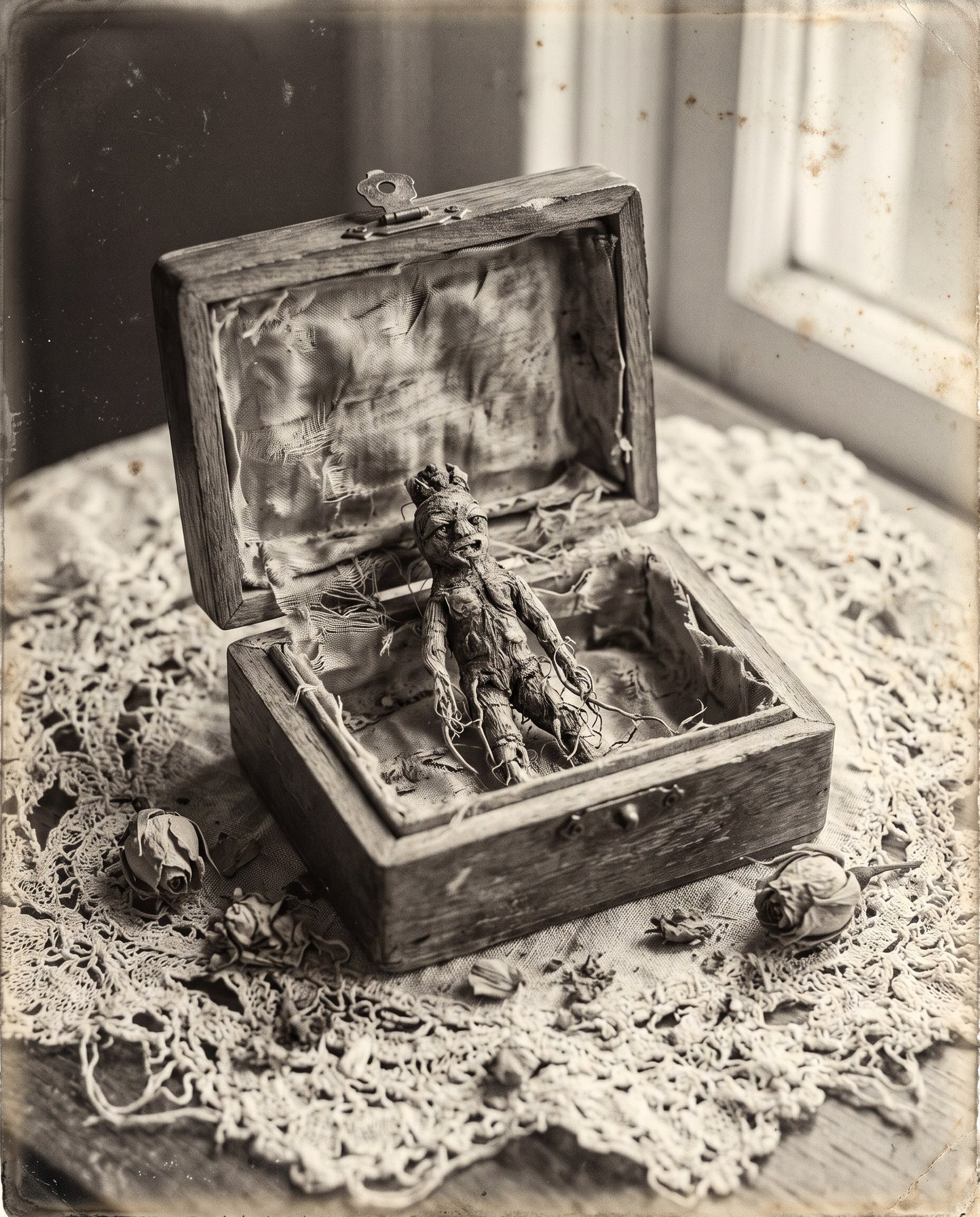
Real mandrakes do not grow wild in Britain, so English buyers got them in boxes from peddlers. In 1568 the herbalist William Turner complained that the little human roots for sale were carved and shaped by hand, and that in all the mandrakes he had dug up himself he had never seen such a thing. Many were not even mandrakes. They were bryony, with a haircut.
In Italy, Machiavelli wrote a whole comedy about the scam. In La Mandragola a young man poses as a doctor and sells a rich old husband a mandrake potion that will make his wife fertile, with one catch: the first man to sleep with her afterwards will die. A stranger must be found. A friar is paid to persuade the wife it is no sin. The young man turns out to be the stranger. The friar keeps the money.
And in 1431, among the seventy articles read against Joan of Arc, Article 7 said she carried a mandrake about with her to bring fortune and riches. She answered, “I deny it entirely.” The court burned her for other reasons, which they had also mostly made up.
The File
The documented record behind this post:
- Mandrake is a plant of the nightshade family; root, leaves and fruit contain tropane alkaloids that cause delirium and unconsciousness. (Public Domain Review, “Love Spells and Deadly Shrieks”)
- Genesis 30:14 to 16: Reuben’s mandrakes, Rachel and Leah’s deal, “I have hired thee with my son’s mandrakes.” Song of Songs 7:13, “The mandrakes give a smell.” (King James Bible)
- Theophrastus, Enquiry into Plants, Book 9, ch. 8: three circles with a sword, face west, dance and talk about love (aphrodisia); Hort’s 1916 Loeb translation, “the mysteries of love”. Theophrastus doubted some of these rules. (Loeb Classical Library, archive.org)
- Josephus, The Jewish War, Book 7, ch. 6: the baaras root, the trench, the dog that dies “instead of the man”. (Whiston translation, lexundria.com)
- The dog harvest in medieval herbals; the deadly shriek; the gallows legend. (Public Domain Review; Royal College of Physicians of Edinburgh, “Shrieking Mandrake”)
- Shakespeare, Romeo and Juliet, Act 4, Scene 3. (Folger Shakespeare Library)
- Dioscorides on mandrake as an anaesthetic; mandrake not native to Britain, imported dried; counterfeits carved from other plants. (Royal College of Physicians of Edinburgh)
- William Turner, A New Herball, 1568, on hand-shaped roots sold in boxes. (Public Domain Review; Linda Hall Library)
- Machiavelli, La Mandragola, plot and the bribed Friar Timoteo. (Public Domain Review, “Machiavelli, Comedian”)
- Trial of Joan of Arc, 1431, Seventy Articles, Article 7 and her answer. (famous-trials.com, University of Missouri Kansas City)
Everything above the jokes is the record. The jokes are the historian’s.
Sign the Book. Odd histories, strange finds, first word on what comes next. Sign it at cocinadebrujas.com.