
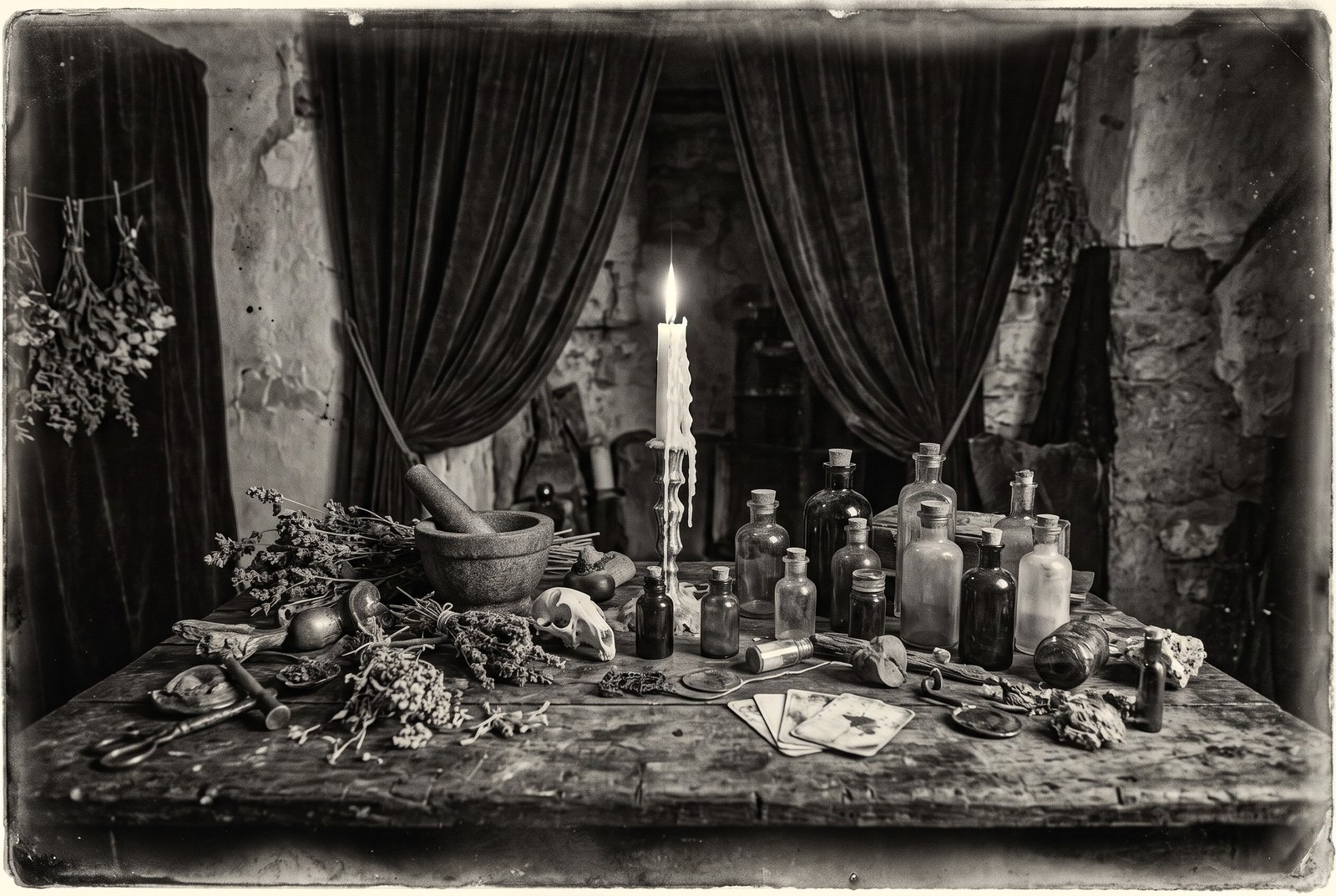
In the 1670s, if you lived in Paris and wanted someone to love you, there was a woman for that. If you wanted someone to stop being alive, there was, it turned out, the same woman.
Her name was Catherine Monvoisin, and Paris called her La Voisin. Her clients included some of the grandest people in France. One of them, according to sworn testimony, was the mistress of the King.
The historian notes that the court of Louis XIV was the most elegant in Europe. It also appears to have been the most heavily medicated.
A jeweller’s wife goes into business
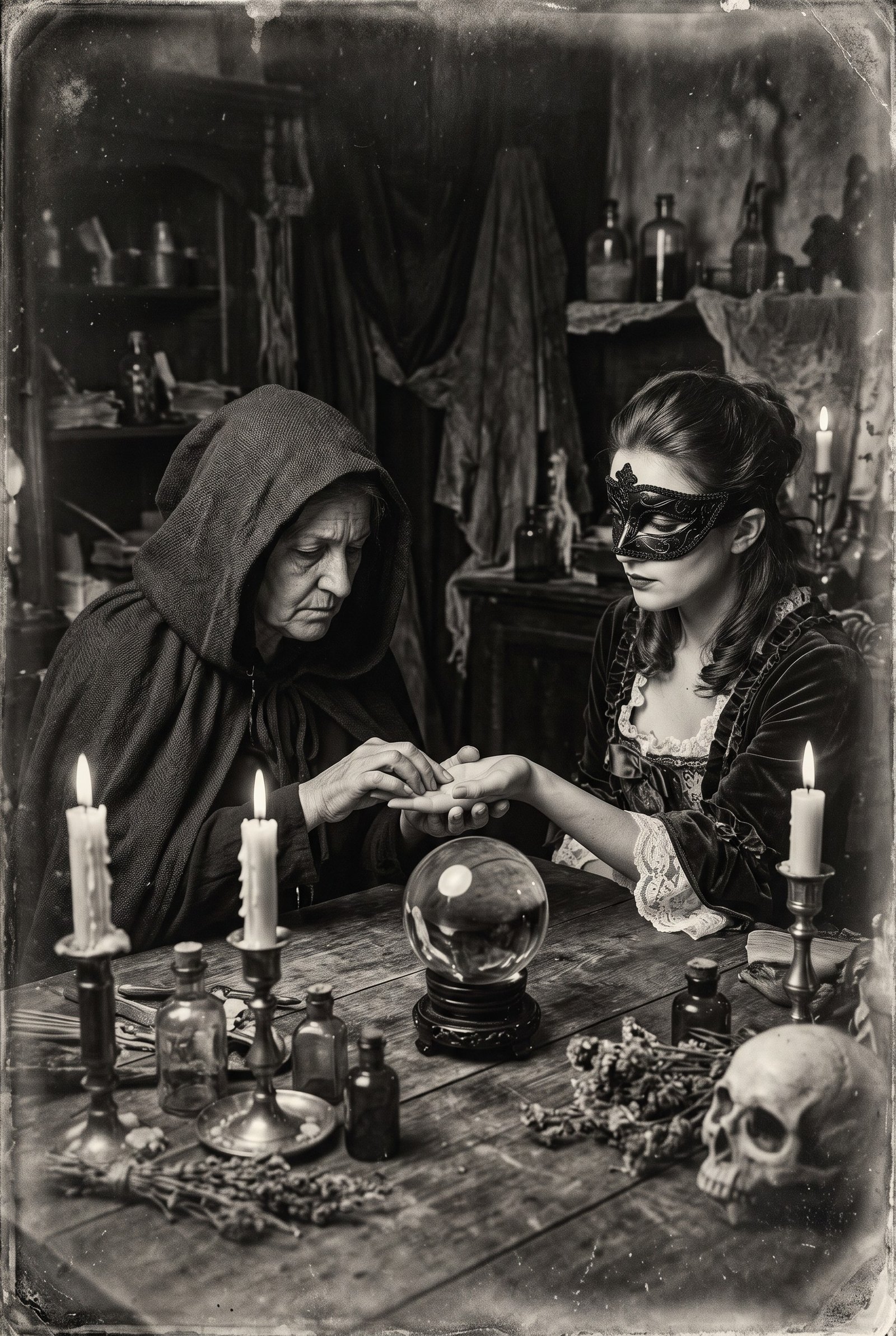
La Voisin was born Catherine Deshayes around 1640 and married Antoine Monvoisin, a jeweller and silk merchant with a shop at the Pont Marie. When his business failed, she turned to fortune telling to keep the family fed.
She was very good at it. By the late 1660s she had wealthy, aristocratic customers, and the menu had grown. There were palm readings. There were love powders. There were illegal abortions. And, through a network that included an apothecary named Catherine Trianon, there was poison.
The love powders deserve a moment. The ingredients alleged in the record include toad bones, mole teeth, Spanish fly, iron filings and human blood. The historian is in no position to say whether this made anyone fall in love. It would certainly have made them feel something.
The poison panic
The affair had been warming up for years. In 1676 the Marquise de Brinvilliers was beheaded at the Place de Grève in Paris and her body burned. She had poisoned her father and both of her brothers, and was caught only because her lover died and left behind a box of letters and poisons. Madame de Sevigne, who wrote about everything, observed afterward that the marquise was now “up in the air.”
Paris took the hint. If one noblewoman had been quietly poisoning her relatives, how many others were?
In 1679 Louis XIV set up a special court to find out. It sat at the Arsenal and became known as the Chambre ardente, the burning court. The King called the trade “this miserable commerce in poisons.” Over three years the commission looked into more than 400 suspects. According to the usual count, 36 people were executed.
The arrest
La Voisin was arrested in March 1679. She was tried in February 1680, convicted of witchcraft, and on 22 February 1680 she was burned at the stake at the Place de Grève. The record says she pushed away the priest and the straw.
That should have been the end of it. It was not, because La Voisin had a daughter, Marguerite, and in the summer of 1680 Marguerite started talking.
The mistress
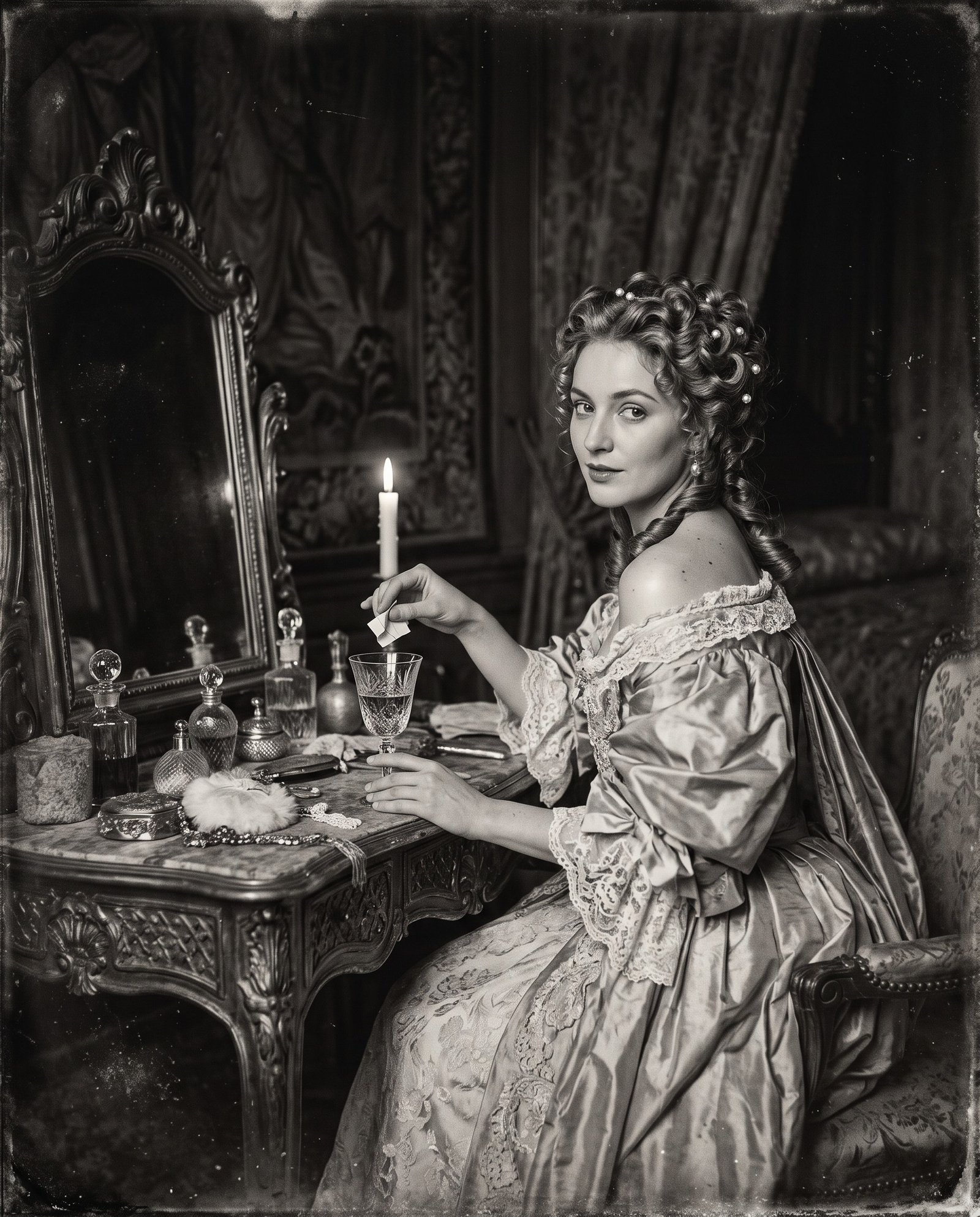
Madame de Montespan had been the King’s mistress since 1667. She was clever, beautiful, funny and the mother of seven of his children. By 1679 she was also watching him fall for a much younger woman, Angelique de Fontanges.
The testimony against her, from La Voisin’s daughter and others, said this. That Montespan had been a client since 1667. That she had bought love powders to slip to the King, to keep his eye from wandering. That she had attended black masses said by a priest named Etienne Guibourg, at least once serving, according to one witness, as the altar herself. And that when love powders stopped working, she had wanted the King and Fontanges dead.
The historian must be precise here. None of it was ever proved. Much of it came from prisoners under questioning, some of it while drunk. Montespan was never charged.
The King looks away
What Louis did next is the most revealing part of the story.
He did not have the accusations tested in court. He judged them, as one encyclopedia puts it, too incendiary to be heard. The court was shut down in July 1682. About sixty prisoners who knew too much were never tried at all, and were instead locked away for life in solitary confinement, forbidden to speak even to their jailers.
The same 1682 edict declared magic to be fraud, gave fortune tellers three days to leave France, and, for the first time anywhere in Europe, put the sale of arsenic under state control. The witches got a deadline. The poison got paperwork.
Montespan stayed at court for another decade, until she retired to a Paris convent in 1691. She died in 1707. And in 1709, near the end of his life, Louis XIV had the registers of the burning court thrown into the fire.
So the record stands like this. A fortune teller burned. Thirty six people executed. Sixty people buried alive in silence. And the most famous customer of all walked away with a pension, because the only judge who could try her was the man she was accused of dosing.
Love is blind, as they say. In Paris, in 1680, it was also extremely well protected.
The File
The documented record behind this post:
- La Voisin born Catherine Deshayes c. 1640; husband Antoine Monvoisin, jeweller and silk merchant at the Pont Marie; turned to fortune telling; aristocratic clients from the late 1660s; love powders (alleged ingredients toad bones, mole teeth, Spanish fly, iron filings, human blood); abortions; poison network with Catherine Trianon; arrested March 1679; tried 17 February 1680 and convicted of witchcraft; burned at the Place de Grève 22 February 1680, pushing away the priest and the straw; daughter Marguerite’s testimony in 1680. (Wikipedia, “La Voisin,” read 17 November 2026; the article carries accuracy warnings, so this post uses only its plainest statements and calls the ingredients “alleged.”)
- Over 400 suspects; a three year commission set up in 1679; “this miserable commerce in poisons”; testimony about Montespan judged “too incendiary”; about sixty prisoners never tried, held for life in solitary confinement and forbidden to speak to their jailers; commission dissolved July 1682; edict calling magic fraud, three days for sorcerers to leave France, first state regulation of arsenic in Europe. (Lynn Wood Mollenauer, “Poisons, Affair of the,” Europe, 1450 to 1789: Encyclopedia of the Early Modern World, via Encyclopedia.com)
- 36 executed; Guibourg, the priest of the black masses, imprisoned for life; the claims against Montespan rested on confessions, some made while La Voisin was intoxicated, and she was never tried. (Wikipedia, “Affair of the Poisons,” read 17 November 2026)
- Brinvilliers beheaded and burned at the Place de Grève, 16 July 1676; poisoned her father and two brothers; caught through her dead lover’s box of letters and poisons; Sevigne’s “up in the air.” (Wikipedia, “Marquise de Brinvilliers,” read 17 November 2026)
- Montespan the King’s mistress from 1667; seven children with him; never conclusively implicated; retired to a Paris convent in 1691; died 1707. (Wikipedia, “Madame de Montespan,” read 17 November 2026)
- Louis XIV had the registers of the Chambre ardente burned in 1709. (Nicolas Mera, guest post on The Freelance History Writer, “The Affair of the Poisons: In the Shadows of the Sun King”; French accounts give 13 July 1709. This post found no primary document for the date.)
- The “human altar” claim about Montespan comes from testimony only and is reported here as an allegation. Claims of thousands of infant remains in La Voisin’s garden are disputed (Anne Somerset, The Affair of the Poisons, 2003) and are left out of this post.
Everything above the jokes is the record. The jokes are the historian’s.
Sign the Book. Odd histories, strange finds, first word on what comes next. Sign it at cocinadebrujas.com.